


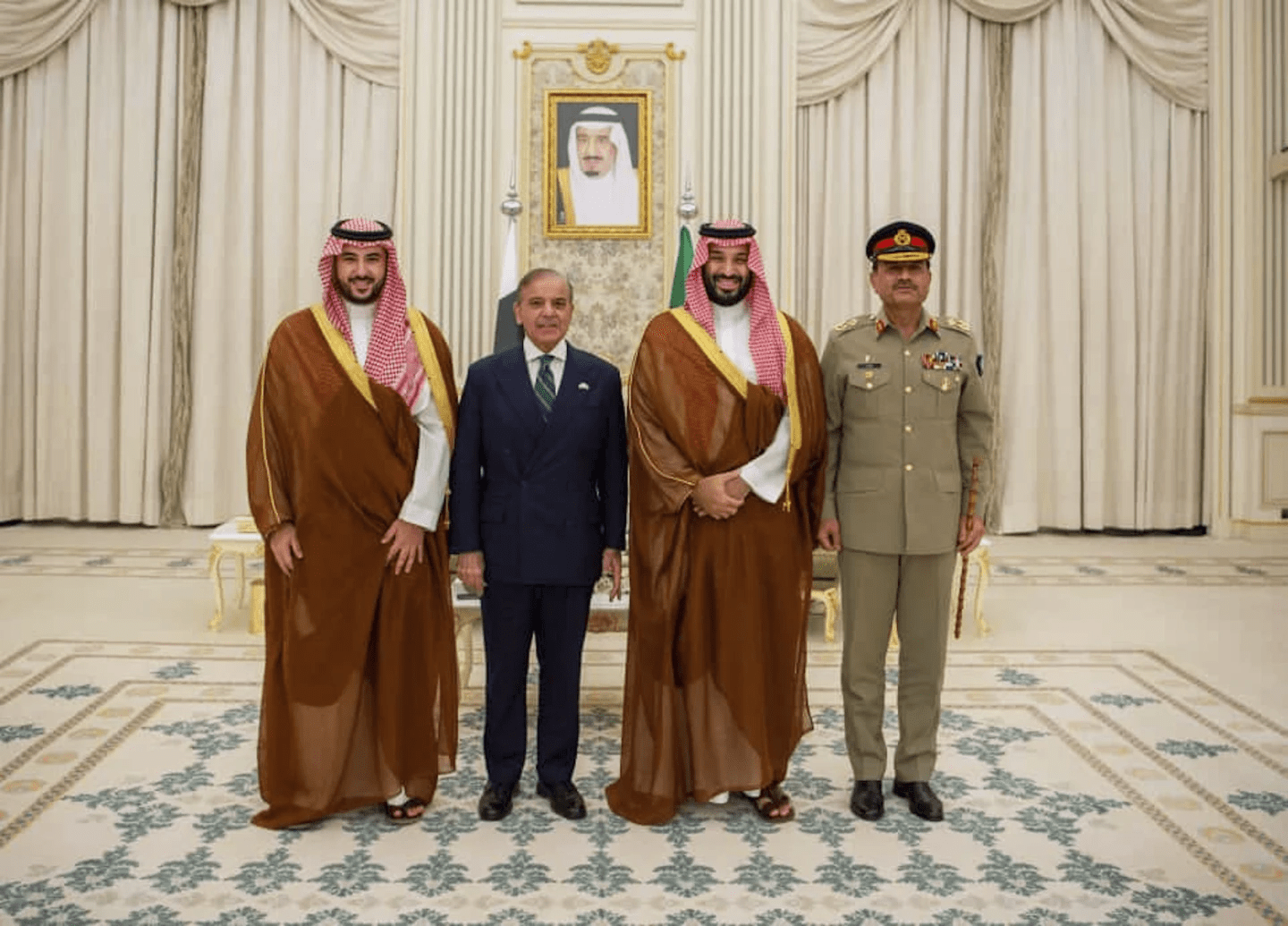
Pakistan’s defense minister Khawaja Mohammad Asif has confirmed that the Pakistan nuclear program can be made available to Saudi Arabia under the countries’ new defense pact. His remarks mark the first public acknowledgment that Islamabad has extended its nuclear umbrella to Riyadh.
Details of the defense pact
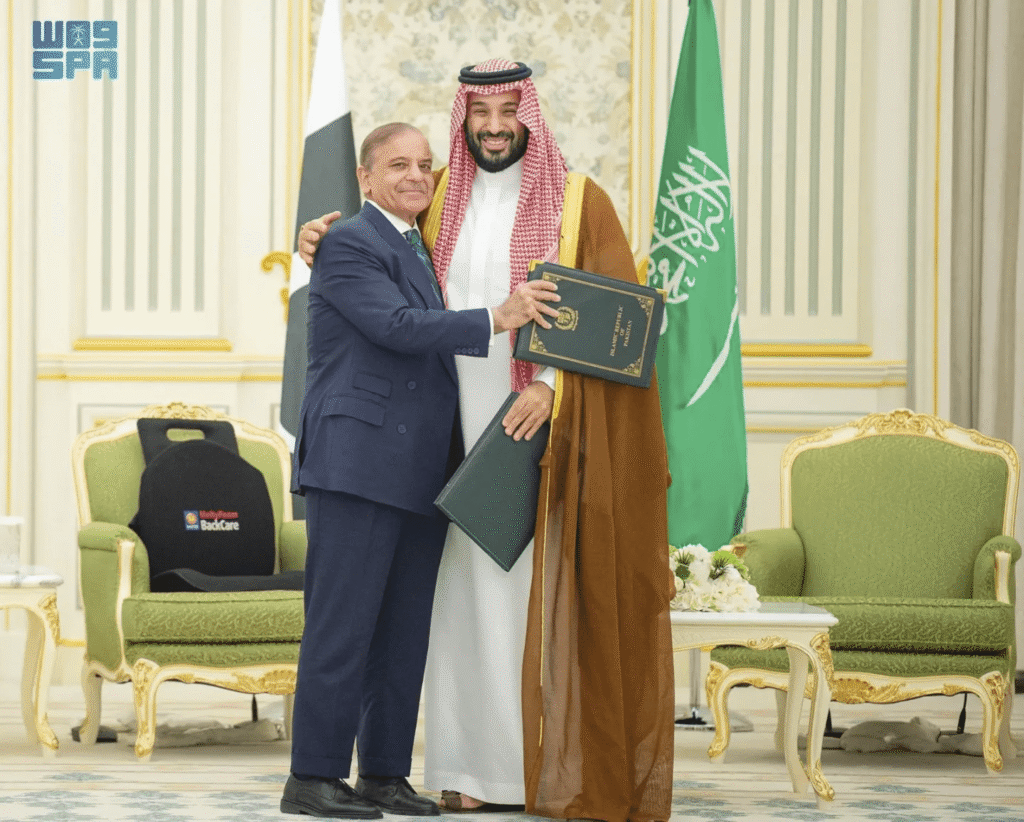
Pakistan and Saudi Arabia signed a landmark defense agreement on Wednesday. The pact declares that an attack on one nation will be treated as an attack on both. This arrangement formalizes decades of military ties between the two nations and sends a strong regional message.
Speaking on Geo TV, Asif explained that Pakistan’s nuclear capability, developed decades ago, would not remain limited to national use. “What we have, and the capabilities we possess, will be made available to Saudi Arabia according to this agreement,” he said.
The Pakistan nuclear program Saudi Arabia defense pact comes at a time of rising tensions in the Middle East following an Israeli strike in Qatar that killed six Hamas leaders.
Implications for regional security
The announcement is viewed by analysts as a direct signal to Israel, which is widely believed to possess nuclear weapons though it has never officially declared them. Pakistan has long criticized Israel for refusing to disclose its arsenal to the International Atomic Energy Agency (IAEA).
Asif refrained from naming Israel or any other nation in his remarks. “We have not named any country whose attack would automatically trigger a retaliatory response. This is an umbrella arrangement offered to one another by both sides,” he said.
The deal highlights the growing security concerns of Gulf states. Since the Hamas attack on Israel in October 2023, Israeli strikes have extended across Iran, Lebanon, Syria, Yemen, and now Qatar.
Nuclear guarantees under the pact
Pakistan tested nuclear weapons in 1998, establishing itself as the only Muslim-majority nuclear power. Since then, the country has maintained a credible deterrence posture against India, which also possesses nuclear arms.
By linking its nuclear umbrella to Saudi Arabia, Pakistan is effectively broadening the reach of its strategic deterrent. The Pakistan nuclear program Saudi Arabia defense pact could reshape power dynamics in the Middle East.
Analysts note that Pakistan’s Shaheen-3 missile, with a range of 2,750 kilometers, is capable of reaching Israel. This capability adds weight to the defense pact.
Saudi Arabia’s role and historic ties
Saudi Arabia has long been connected to Pakistan’s nuclear program. Retired Brigadier Feroz Hassan Khan has acknowledged that Riyadh provided “generous financial support” that enabled Islamabad to continue its nuclear development despite sanctions.
For decades, speculation has circulated that Pakistan could extend nuclear protection to Saudi Arabia if required. Asif’s statement is the clearest confirmation yet of such an arrangement.
Deputy Prime Minister Ishaq Dar added that other countries have shown interest in similar agreements. “The door is not closed to others,” he said, hinting at a possible expansion of the pact.
International response and challenges
The IAEA, which monitors both Pakistan and Saudi Arabia’s nuclear activities, has not yet commented on the defense minister’s statement.
Israel has also remained silent on the pact. However, the timing suggests that Gulf states are taking proactive measures to shield themselves amid escalating regional violence.
The United States has traditionally played a balancing role in Saudi defense. But Washington’s strained relations with Riyadh in recent years may have opened space for Pakistan to step in as a security guarantor.
Both Pakistan and Saudi Arabia also face important business with the U.S. and international regulators. Disney’s ties aside, Islamabad is seeking economic relief, while Riyadh is pursuing major investments linked to its Vision 2030 plan.
Pakistan’s motives
Pakistan’s move is not only about protecting an ally. It also reinforces Islamabad’s position as a central actor in Muslim world security. By committing nuclear deterrence to Saudi Arabia, Pakistan signals that its strategic role extends far beyond South Asia.
At the same time, the defense pact may complicate relations with India. New Delhi closely watches Islamabad’s nuclear posture, and any extension of that deterrent could heighten regional rivalries.
Conclusion
The Pakistan nuclear program Saudi Arabia defense pact marks a historic shift in regional security. By formally extending its nuclear umbrella to Riyadh, Islamabad has elevated its strategic role in the Middle East.
While questions remain about implementation, international oversight, and potential escalation, the agreement reflects a deepening bond between Pakistan and Saudi Arabia. It also sends a clear message to rivals: aggression against either nation will be met with joint defense, potentially including nuclear deterrence.
For Pakistan, the pact highlights its enduring relevance as a nuclear power. For Saudi Arabia, it offers a new shield amid uncertain times.





Leave a Reply