


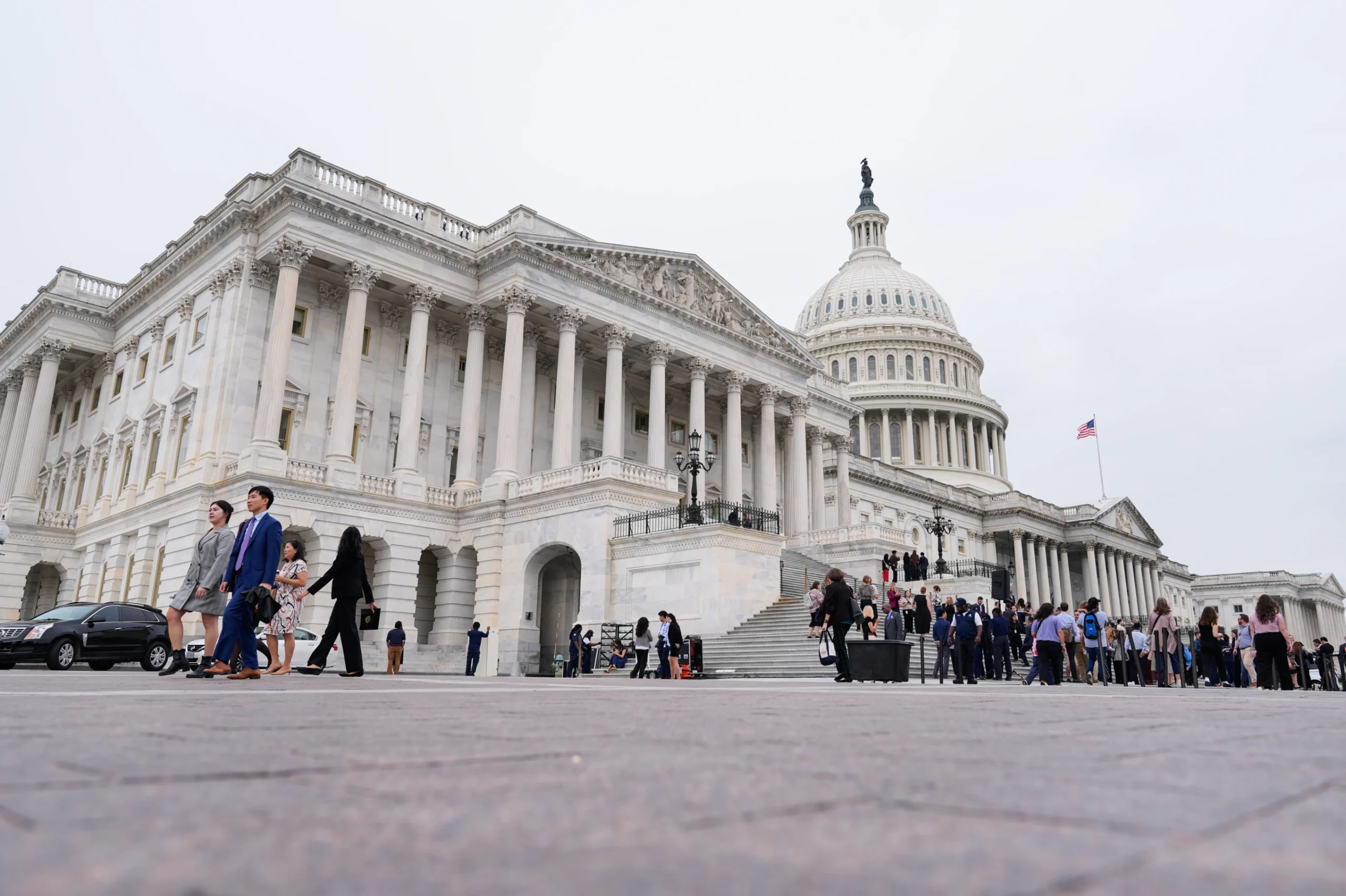
The U.S. government shutdown 2025 officially begins at 12:01 a.m. Wednesday after the Senate failed to pass a funding deal Tuesday night. It marks the first federal government shutdown in nearly seven years and is expected to furlough hundreds of thousands of federal workers while disrupting public services across the nation.
Why the Government Shut Down
Lawmakers were unable to agree on a short-term spending bill. Republicans pushed a measure to extend federal funding through November 21, but Democrats demanded that the package reverse Medicaid cuts and extend Affordable Care Act subsidies.
Without a resolution, the U.S. government shutdown 2025 triggered an automatic halt of nonessential services under federal law.
What a Shutdown Means for Federal Workers
A shutdown requires agencies to separate employees into two categories:
- Excepted workers — those who protect life and property, such as air traffic controllers, TSA agents, FBI investigators, and CIA officers. They will continue working but won’t receive pay until the shutdown ends.
- Non-excepted workers — considered nonessential, will be placed on unpaid furlough. This could cause significant financial hardship for families if the shutdown drags on.
Trump administration officials also directed agencies to consider permanent staff reductions for programs “not consistent with the President’s priorities.”
Which Services Will Be Affected
During the U.S. government shutdown 2025, some essential services continue, but many others pause:
- Continue: National security, law enforcement, immigration enforcement, Social Security, and Medicare benefits.
- Pause or reduce: Passport and visa processing, national parks, small business loan approvals, and many regulatory inspections.
Airports will stay open, but travelers may face longer lines and delays due to unpaid staff shortages.
Political Battle Behind the Shutdown
Democrats accused Republicans of ignoring urgent health care needs. They pushed to roll back Medicaid cuts from Trump’s summer mega-bill and extend tax credits to help families afford health insurance. Republicans dismissed the demands as a “nonstarter,” setting the stage for the funding lapse.
Senate Majority Leader John Thune expressed optimism that Democrats might change course. “We’re hoping for enough votes to reopen the government soon,” he said Tuesday.
What Happens Next
The Senate is scheduled to reconvene Wednesday morning to resume negotiations. Both sides face pressure from federal employees, markets, and the public to resolve the standoff quickly.
For now, the U.S. government shutdown 2025 underscores deep partisan divisions and creates uncertainty for millions of Americans relying on government services.




Leave a Reply