



Introduction
The Gaza flotilla carrying nearly 500 activists and symbolic humanitarian aid has been intercepted by the Israeli navy. Organizers say at least 19 of its boats were stopped as they approached Gaza, reigniting global debate over Israel’s maritime blockade and the legality of such actions in international waters.
Gaza Flotilla and Its Mission
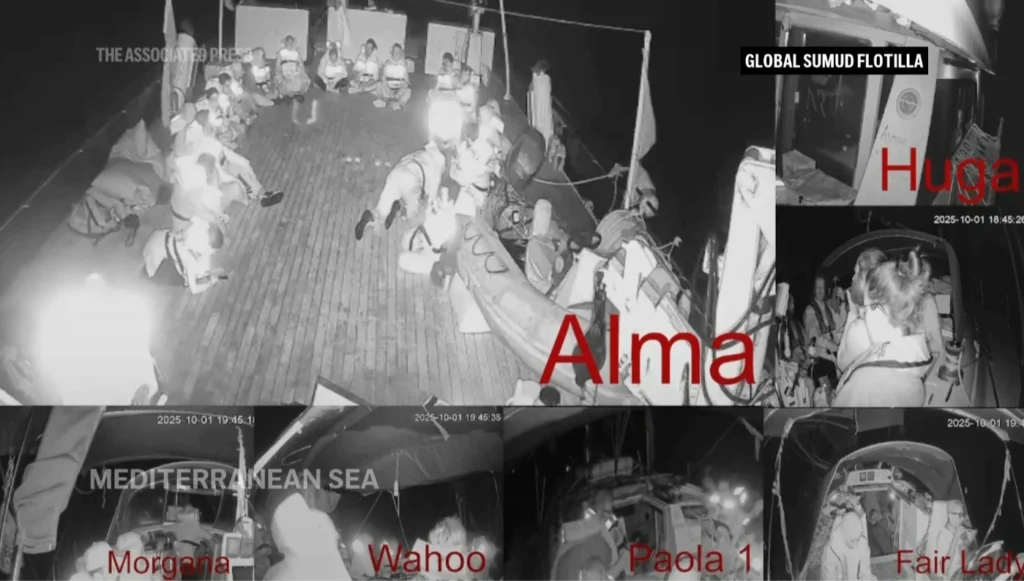
The Gaza flotilla, known as the Global Sumud Flotilla, departed from Barcelona with nearly 50 boats. Activists from dozens of countries — including Greta Thunberg, Nelson Mandela’s grandson Mandla Mandela, and former Barcelona Mayor Ada Colau — joined the mission to challenge Israel’s 18-year blockade.
Despite warnings from Israel and international governments, the flotilla pressed on, livestreaming its journey and voicing solidarity with Palestinians.
How the Interception Unfolded
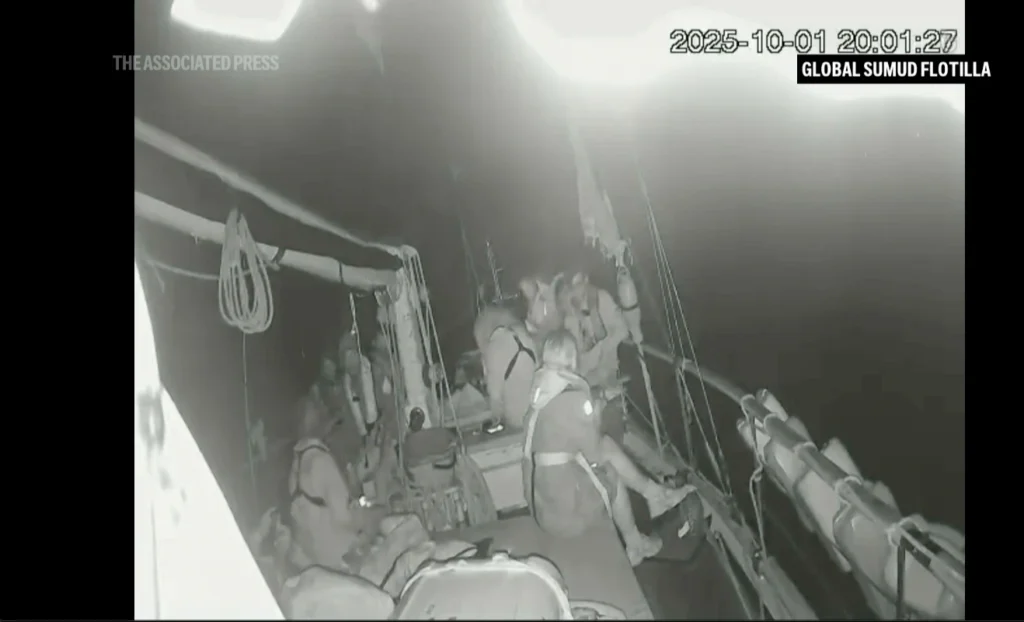
According to activists, around a dozen Israeli naval vessels approached the flotilla with their transponders off. Boats were ordered to cut engines or risk seizure. Some activists reported water cannons were used. Videos shared on social media showed tense moments before devices were tossed overboard to avoid confiscation.
Israeli authorities confirmed intercepting several boats and transferring passengers, including Thunberg, safely to the port of Ashdod. Officials insisted no harm came to activists during the Gaza flotilla operation.

International Reactions
The interception of the Gaza flotilla triggered sharp reactions worldwide:
- Turkey denounced it as an “act of terrorism” and vowed to secure the release of its citizens.
- Colombia threatened to expel Israeli diplomats and suspend trade agreements if the flotilla was stopped.
- Spain’s prime minister defended the mission as humanitarian, while Italy urged activists to avoid confrontation.
Meanwhile, pro-Palestinian protests erupted across Europe, with demonstrators rallying in solidarity with the flotilla.

Legal Debate Over Maritime Blockade
The interception of the Gaza flotilla raises questions about international law. Under the U.N. Convention on the Law of the Sea, states can only exercise control up to 12 nautical miles from their shores. However, Israel argues its blockade is militarily justified to prevent weapons from reaching Hamas.
Experts remain divided. Some say Israel has the right to stop the flotilla, while others argue international law guarantees safe passage for humanitarian aid.
What’s Next for the Gaza Flotilla
Though many boats have been intercepted, organizers insist the mission will continue. They stress that the Gaza flotilla was symbolic but necessary to highlight humanitarian concerns in Gaza.
With deportations of detained activists expected in the coming days, the flotilla may not break the blockade — but it has already reignited a global spotlight on Gaza, Israel’s policies, and the limits of international law.



Leave a Reply