


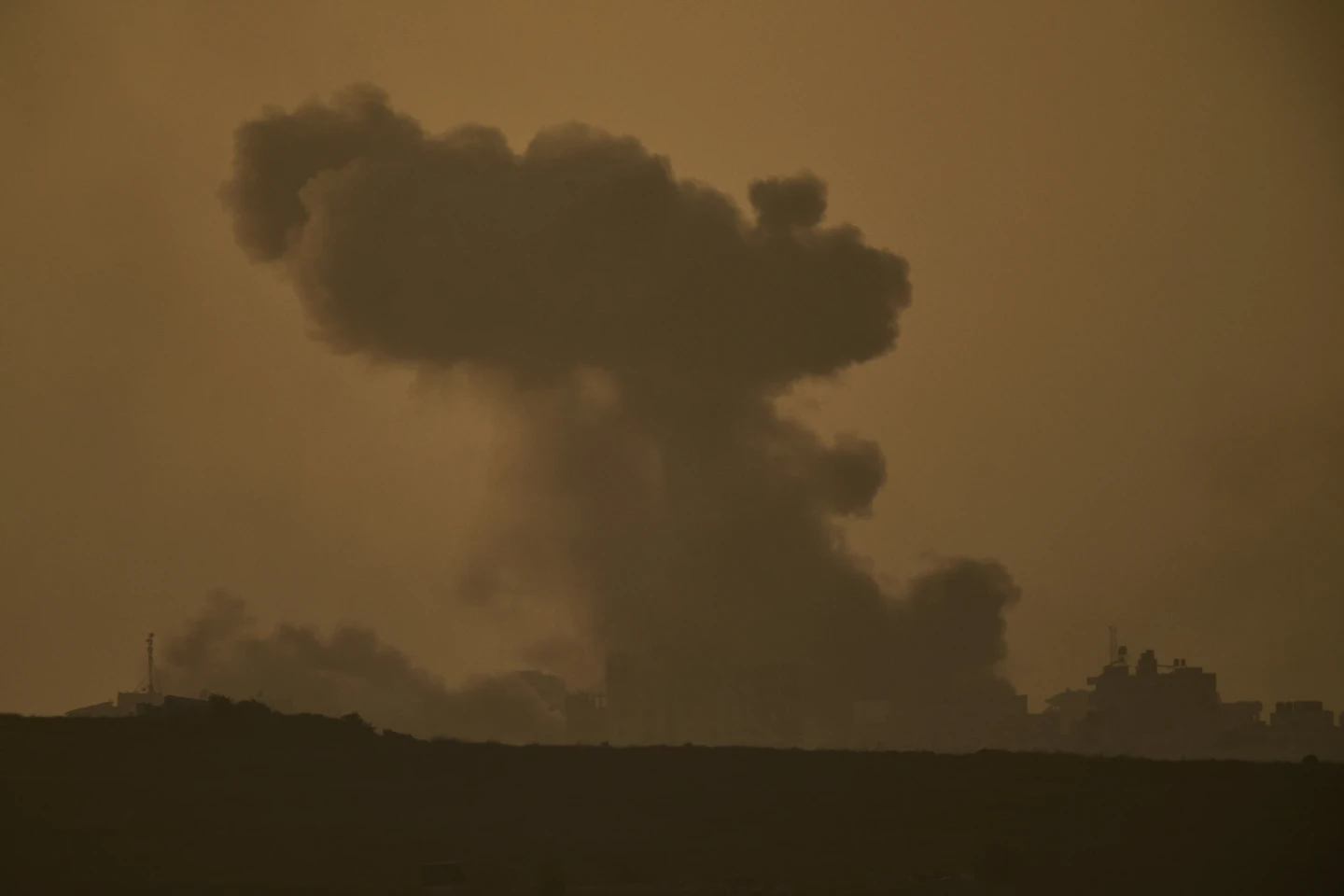
Israel’s defense minister declared that Gaza is burning after Israeli strikes hit Gaza City overnight, killing at least 12 people and injuring many more. The heavy bombardment came as U.S. Secretary of State Marco Rubio said time was running out for a negotiated settlement.
Heavy Overnight Bombardment
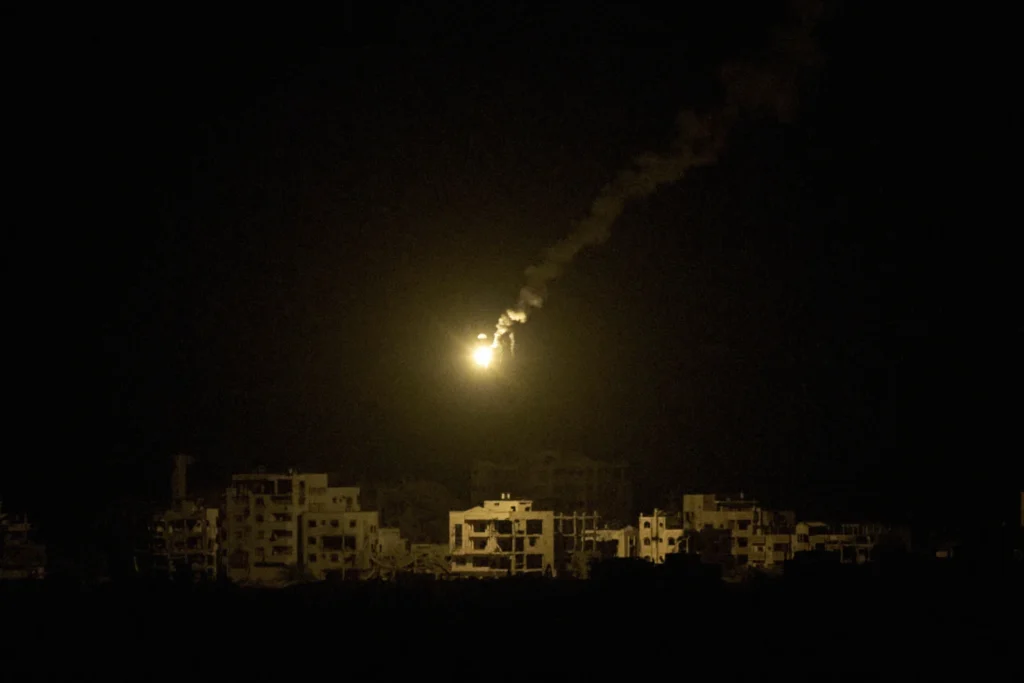
Explosions shook neighborhoods across Gaza City late Monday and into early Tuesday. The strikes destroyed homes and scattered families into the streets. At Shifa Hospital, staff received 12 bodies and nearly 90 wounded people within hours.
Dr. Rami Mhanna, the hospital’s director, said the flow of casualties stretched resources to the breaking point. “We are already overwhelmed, and the strikes keep coming,” he told reporters.
Local resident Radwan Hayder described the experience as unbearable. “We heard constant explosions. Families stayed near the hospital, hoping it was safer than their homes,” he said.
Katz Declares ‘Gaza Is Burning’
Defense Minister Israel Katz announced on X that “Gaza is burning.” He praised Israeli soldiers for fighting “heroically” and vowed the campaign would continue until Hamas was dismantled and all hostages freed.
“The military is striking with an iron fist at Hamas infrastructure,” Katz said. “We will not stop. We will not go back until the mission is complete.”
Although the Israeli army did not formally confirm a new offensive, Katz’s remarks strongly indicated that one was underway.
U.S. Diplomatic Push
Rubio departed Israel for Qatar, where he aimed to reassure leaders angered by a recent Israeli strike that killed Hamas members and a local security official. Before leaving, Rubio said the opportunity for talks was shrinking fast.
“We think we have only days, maybe weeks, to reach a deal,” Rubio said. “The Israelis have already begun operations. Negotiations must move quickly.”
He stressed that Washington preferred a diplomatic resolution but admitted the risks of escalation. “The only thing worse than war is a war with no end,” he added.
International Reaction
At an emergency summit in Qatar, Arab and Muslim leaders condemned Israel’s latest attacks. Yet they stopped short of imposing measures that might pressure Israel directly. Analysts noted the divisions in the Arab world and the influence of U.S. backing for Israel.
Qatar, which has mediated past ceasefire agreements, remains crucial in current negotiations. Still, frustration with Israel’s expanding operations threatens its role as a trusted intermediary.
Hostage Crisis at the Core
Netanyahu and Rubio repeated that the war’s end depends on releasing the 48 remaining hostages and removing Hamas from power. About 20 hostages are believed to still be alive.
Hamas has tied any release to sweeping demands: freeing Palestinian prisoners, securing a permanent ceasefire, and forcing Israel to withdraw from Gaza. Israeli leaders reject those conditions, keeping talks stalled.
Mounting Humanitarian Toll
The conflict began on October 7, 2023, when Hamas-led militants killed about 1,200 people in Israel and abducted 251 hostages. Since then, Israeli strikes have devastated Gaza.
According to Gaza’s Health Ministry, at least 64,871 Palestinians have died. Women and children make up nearly half the total. The ministry does not separate civilians from fighters, but humanitarian agencies say civilian suffering is immense.
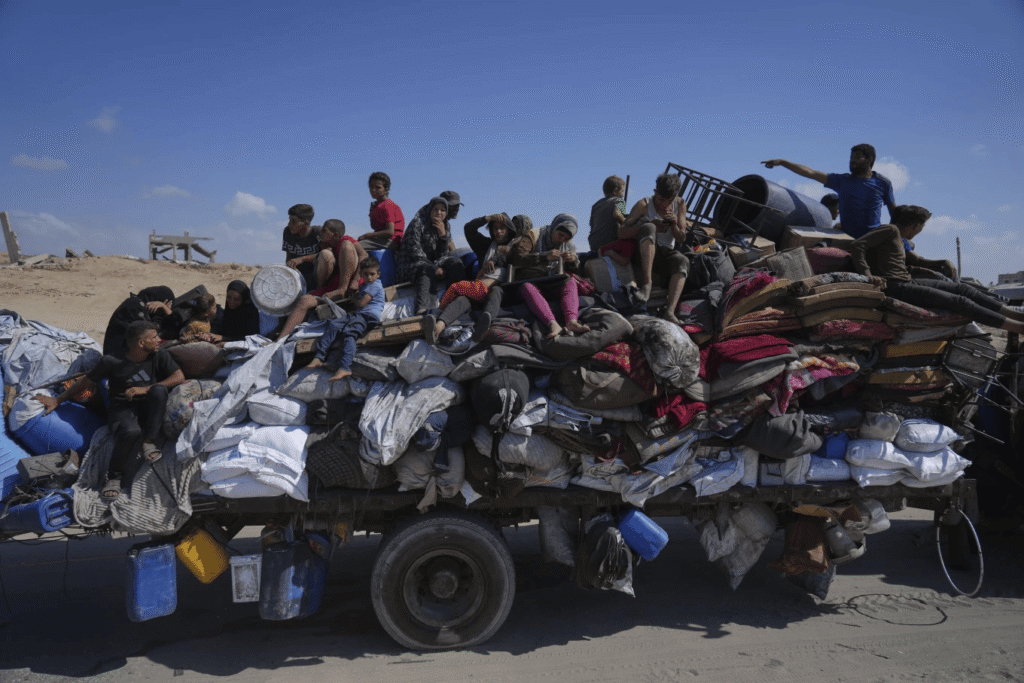
On Monday, hundreds of displaced families fled northern Gaza. They traveled by foot and by vehicle, carrying what little they could. The scenes reflected the deep desperation of civilians caught between war and displacement.
No Signs of De-escalation
Israeli leaders show no willingness to halt the campaign. Netanyahu argues that a temporary ceasefire would only prolong Hamas’s control. Katz echoed this view, saying operations would intensify until victory.
International mediators face a dilemma. They must balance Israel’s security demands with global appeals to protect civilians. Rubio’s meetings in Qatar highlight Washington’s struggle to manage both roles.
Conclusion
The statement that Gaza is burning after Israeli strikes underscores a grim new stage of the war. Israel pushes forward with military goals, Hamas holds firm to its conditions, and civilians suffer in between.
Without compromise, Gaza faces more destruction, and the region risks greater instability. The next few days, as Rubio noted, may decide whether negotiations can succeed or whether the fighting escalates further.




Leave a Reply