


Introduction
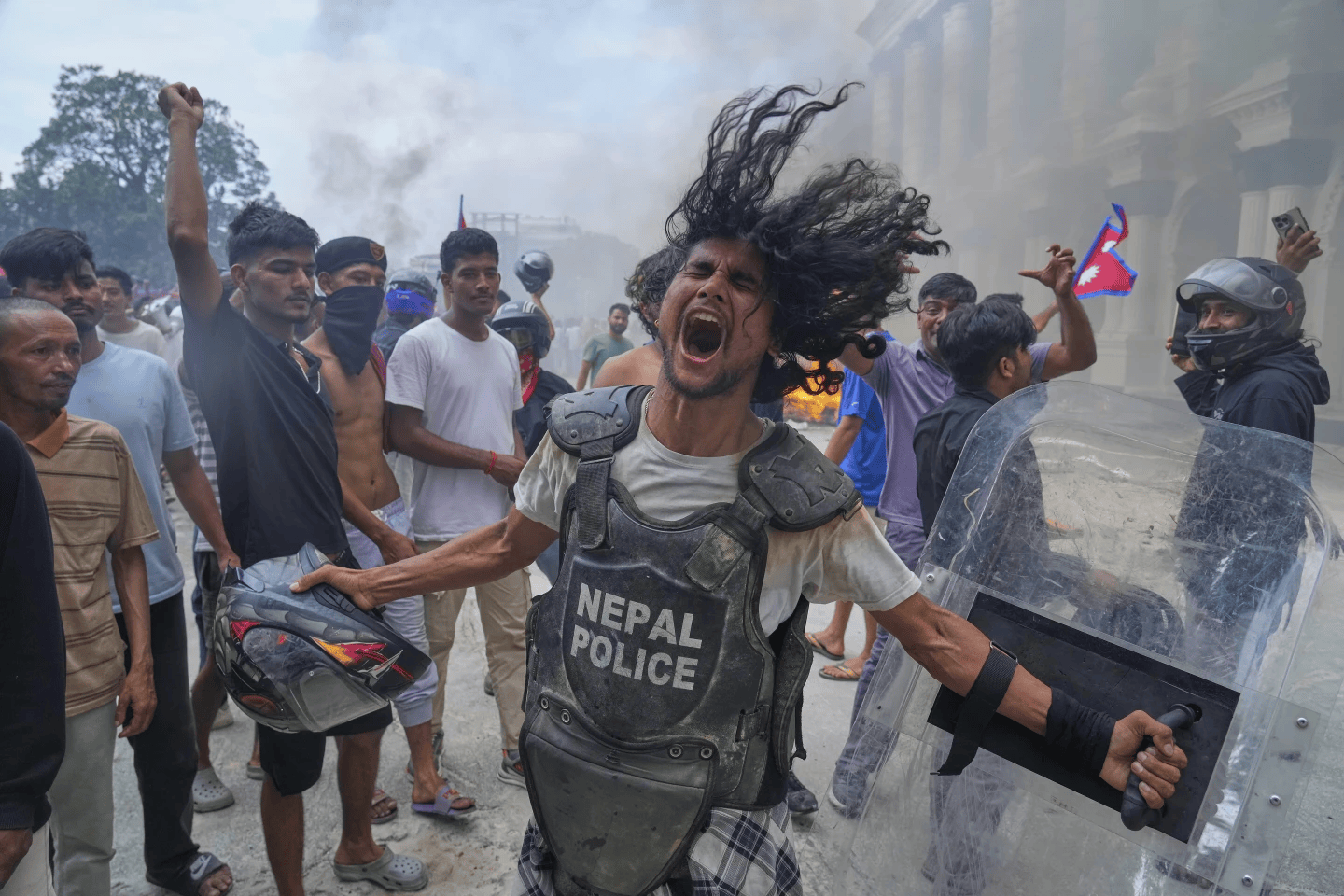
The Nepal social media ban protests have spiraled into some of the most violent unrest the Himalayan nation has seen in years. What began as demonstrations against the government’s decision to block Facebook, YouTube, and X has grown into a youth-driven movement against corruption, unemployment, and political privilege.
At least 19 people were killed after police opened fire on demonstrators, and Prime Minister K.P. Sharma Oli has resigned under pressure. Still, tens of thousands remain on the streets, setting fire to government buildings and demanding change.
Why Nepal Banned Social Media
The Nepalese government briefly banned platforms like Facebook, YouTube, and X after accusing the companies of failing to register with local authorities and comply with oversight rules. Officials framed it as a push for accountability, but rights groups slammed the move as a threat to free expression.
Though the ban was lifted, the protests continue—now fueled by deeper frustrations over nepotism, corruption, and joblessness.
Rising Anger Among Nepal’s Youth
Nepal’s youth unemployment rate stood at about 20% last year (World Bank). Many young people are leaving daily to work abroad in the Middle East and Southeast Asia. Meanwhile, the children of political elites—often referred to as “nepo kids”—enjoy luxury lifestyles, sparking anger among struggling students and job seekers.
One protester, student Bishnu Thapa Chetri, put it bluntly:
“The country has gotten so bad that for us youths, there is no grounds for us to stay.”
The Protests Turn Violent
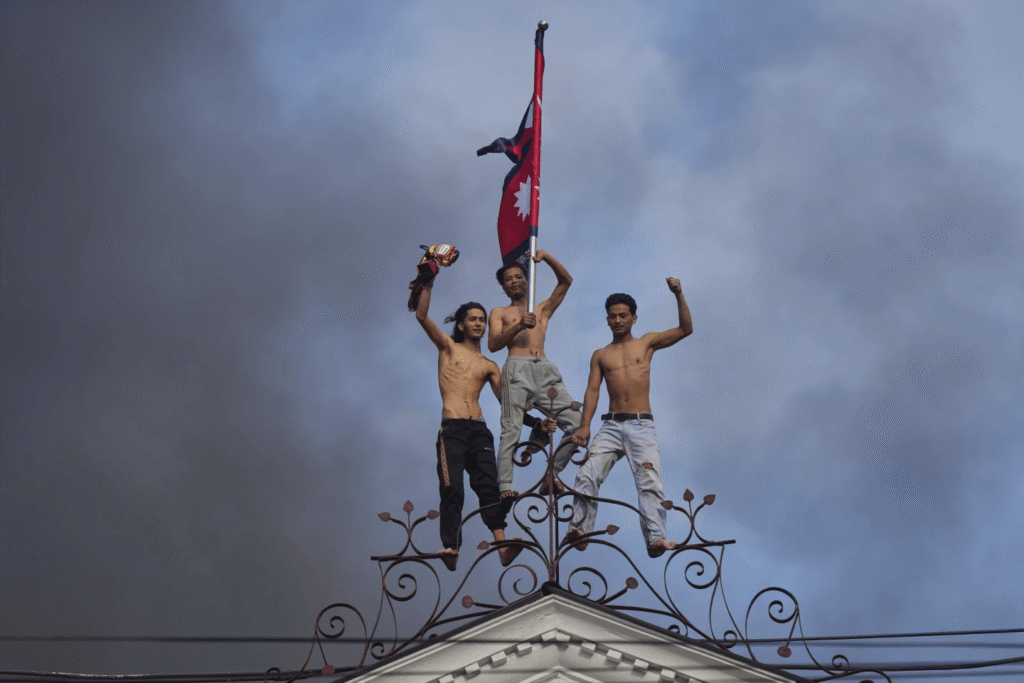
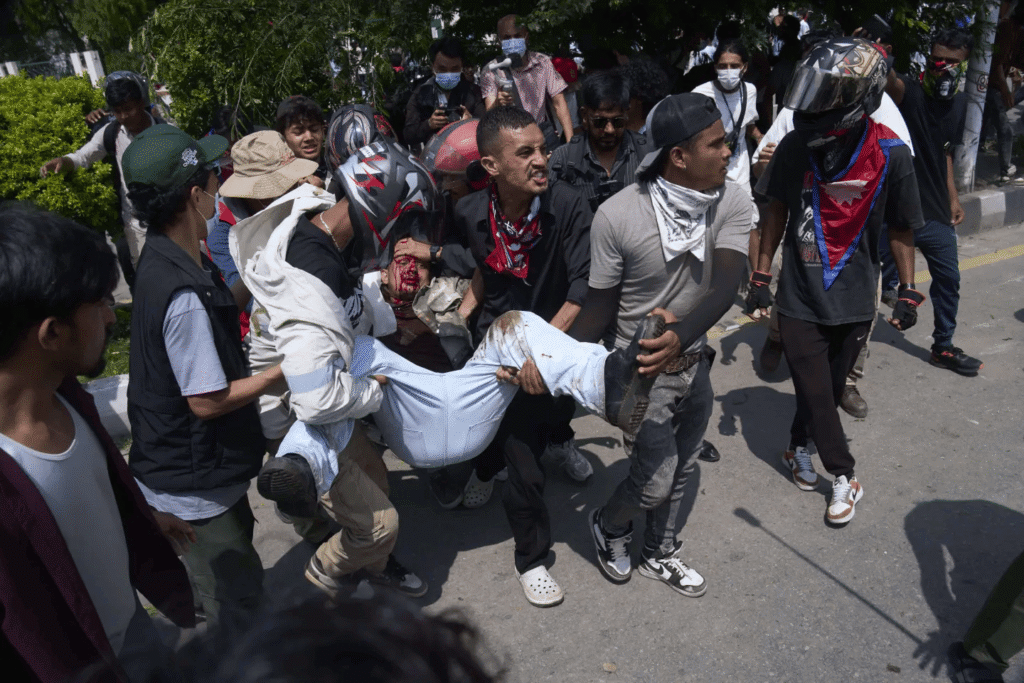
The protests, described as the “Gen Z uprising,” escalated dramatically after police fired into crowds on September 9, killing 19 and injuring many more.
- Government buildings torched: The prime minister’s office, parliament, and several ministers’ residences were set on fire.
- Politicians attacked: Videos showed former Prime Minister Sher Bahadur Deuba and his wife, Foreign Minister Arzu Rana Deuba, bloodied after being beaten by demonstrators.
- Symbolic sites stormed: Protesters broke into Singha Durbar, the seat of Nepal’s ministries, celebrating as the historic compound burned.
Political Fallout: Oli Resigns
Prime Minister K.P. Sharma Oli announced his resignation, but protesters show no signs of backing down. He will serve as a caretaker leader until a new government is formed, though his authority is unclear.
President Ram Chandra Poudel has appealed for calm, while the Nepalese army has so far remained in its barracks. Army Chief Ashok Raj Sigdel urged protesters to stop, warning of further loss of life if violence continues.
Global Reaction
- U.N. Secretary-General António Guterres called for restraint, peaceful protest, and an independent investigation into the killings.
- Human rights groups say Nepal’s social media bill represents a step toward censorship, not accountability.
- Tech companies Meta, Google, and X have not publicly responded, while TikTok and Viber have complied with Nepal’s rules.
Why It Matters
These protests mark more than just outrage at a temporary social media ban. They highlight:
- The frustration of Nepal’s youth, struggling with limited opportunities.
- Growing resentment toward political elites seen as corrupt and disconnected.
- The fragility of Nepal’s democracy, caught between China and India’s influence.
The question now: Will Nepal’s leaders engage in reforms—or will anger in the streets continue to boil over?
Conclusion
The Nepal protests against the social media ban have become a flashpoint for wider discontent. With nearly 20 dead, government buildings in flames, and the prime minister out of office, the country stands at a crossroads.
What began as anger over blocked apps has transformed into a generational fight for justice, accountability, and a better future.

Leave a Reply