


Introduction
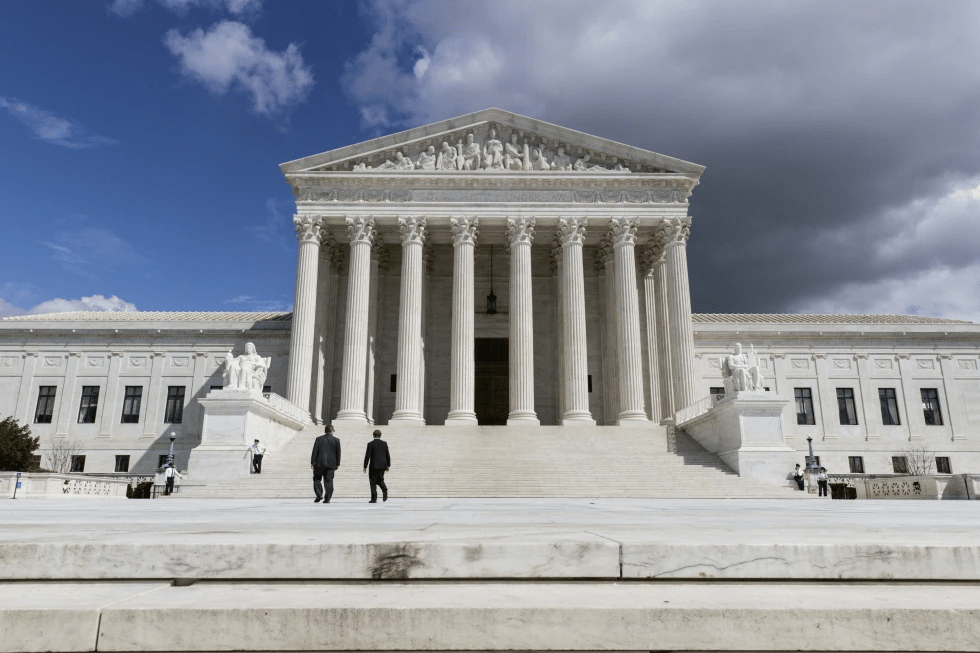
The Supreme Court Trump tariffs case is moving forward at record speed. On Tuesday, the justices agreed to hear arguments in November 2025, an unusually fast timeline by Supreme Court standards. At the center of the case is a defining question: Does President Donald Trump have the power to impose sweeping tariffs without Congress?
Until the ruling, Trump’s tariffs—already reshaping global trade and impacting U.S. businesses—will remain in effect.
Why the Trump Tariffs Are in Court
The case stems from challenges by small businesses and states who argue Trump’s import taxes are unlawful. They claim the tariffs, covering goods from almost every country, are devastating their industries and pushing many toward bankruptcy.
“Congress, not the President alone, has the power to impose tariffs,” said attorney Jeffrey Schwab of the Liberty Justice Center.
Two lower courts sided with the challengers, ruling that Trump overstepped his authority under the 1977 International Emergency Economic Powers Act (IEEPA). However, a divided appeals court allowed the tariffs to remain in place during litigation.
Trump Administration’s Argument
The Trump administration insists the law grants the president broad authority to regulate imports during emergencies. According to Solicitor General D. John Sauer, striking down the tariffs would:
- Disrupt sensitive trade negotiations.
- Force the U.S. Treasury to refund billions in import taxes.
- Weaken efforts to combat fentanyl trafficking and Russia’s war in Ukraine.
The administration describes the potential fallout as nothing short of “economic catastrophe.”
A Conservative Court, a Big Test
This case will test the Supreme Court’s stance on presidential power vs. congressional authority.
- The Constitution gives Congress the power to levy tariffs.
- But in recent decades, Congress has ceded more tariff-setting authority to the executive branch.
- Trump has aggressively used that power, citing national emergencies to bypass traditional trade approval processes.
Three of the Court’s conservative justices were nominated by Trump, raising questions about how the Court’s 6–3 conservative majority will weigh executive authority.
The Economic Stakes
Trump’s tariffs have become a hallmark of his trade strategy, used to pressure foreign governments into new deals while generating massive federal revenue.
- Tariff revenue: $159 billion collected by late August 2025 — more than double compared to the same time last year.
- Concerns: Economists warn the tariffs could drive up prices for U.S. consumers and slow economic growth.
- Global impact: Allies and rivals alike, including Canada, China, and Mexico, are directly affected.
What’s Included in the Case
The Supreme Court will focus on two sets of tariffs declared under national emergency powers:
- February 2025 tariffs on imports from Canada, China, and Mexico.
- April 2025 tariffs covering additional goods worldwide.
Notably, the case does not include Trump’s earlier tariffs on steel, aluminum, autos, or his first-term China tariffs—many of which were kept in place by President Joe Biden.
Why This Case Matters
This case isn’t just about Trump’s policies—it could redefine the balance of power over trade in the U.S.:
- If Trump wins: Presidents may gain even broader authority to set tariffs unilaterally.
- If challengers win: Congress could reassert its constitutional role, limiting future presidents’ trade powers.
Conclusion
The Supreme Court Trump tariffs case represents a historic clash between executive power and congressional authority. With billions in revenue, global trade relationships, and constitutional principles at stake, the November hearing will be closely watched not only in Washington but around the world.
Until then, Trump’s tariffs remain in place—reshaping the economy while the nation awaits the justices’ ruling.





Leave a Reply