


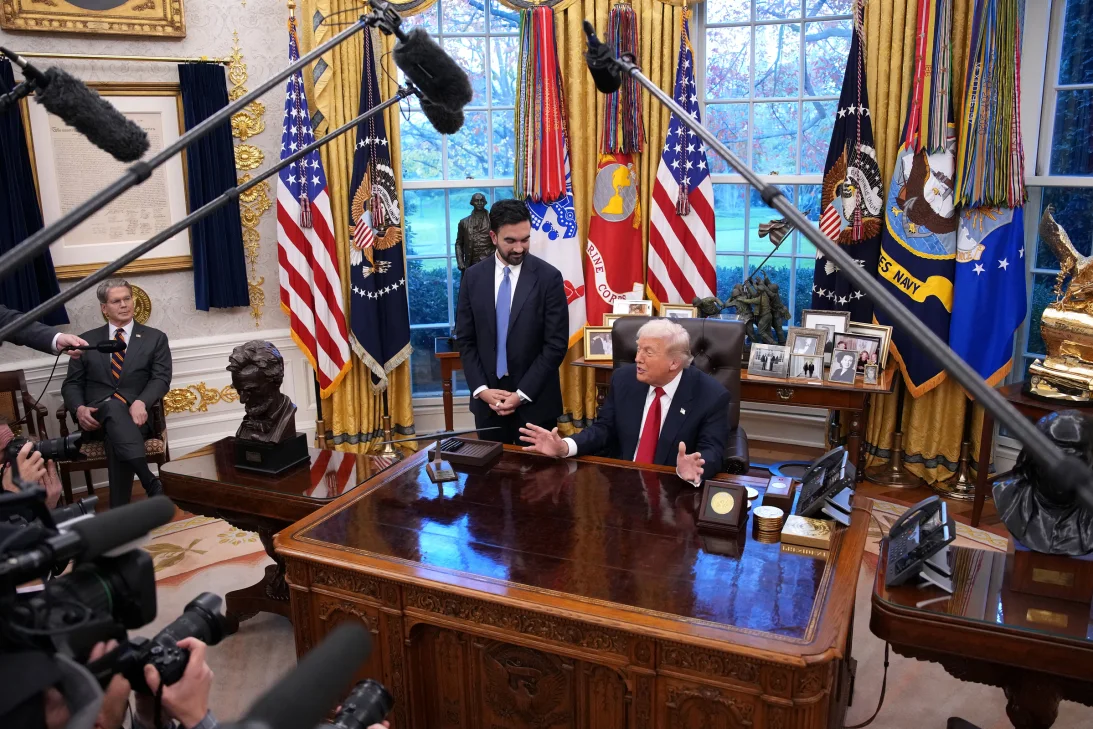
The recent Trump Mamdani meeting stunned political analysts and observers. Most expected a tense, ideological showdown between President Donald Trump and New York City Mayor-elect Zohran Mamdani, a democratic socialist with sharp criticisms of Trump. Instead, the Oval Office gathering turned into an unusually cordial event that showcased mutual compliments, softened rhetoric, and shared priorities. The surprising tone of this meeting carries deeper implications for politics, media narratives, and GOP strategy.
1. A Surprisingly Friendly Exchange
The Trump Mamdani meeting started with an unexpected display of friendliness. Trump offered praise rather than criticism, acknowledging Mamdani’s political talent and potential. Despite their ideological differences, Trump claimed, “We agree on a lot more than I would’ve thought.” He also stated, “I think this mayor can do some things that are going to be really great.”
Reporters attempted to provoke confrontation by highlighting past accusations exchanged between the two. Yet both leaders focused instead on common ground. Trump emphasized Mamdani’s ideas, while Mamdani carefully redirected conversations back to affordability. Rather than debating immigration, ideology, or foreign policy, Mamdani repeatedly stressed the cost-of-living crisis affecting New Yorkers. He tactfully avoided deep political conflict, proving his strategic communication skills.
2. Trump Defended Mamdani More Than Expected
Another key aspect of the Trump Mamdani meeting was Trump’s eagerness to defend Mamdani from media scrutiny. When reporters pressed Mamdani about calling Trump a “fascist,” Trump responded with humor, saying, “That’s ok. You can just say yes.” This exchange signaled that Trump was not interested in reopening old feuds.
Trump continued defending Mamdani when questioned about deportation, extremism, and crime. He downplayed their differences, stating, “He doesn’t want to see crime, and I don’t want to see crime.” He even dismissed political attacks labeling Mamdani a “jihadist,” rejecting inflammatory rhetoric. This protective stance was unusual for Trump, who typically deploys aggressive language against political opponents.
3. Mutual Respect and Political Strategy
The Trump Mamdani meeting highlighted Trump’s appreciation for strong political personalities. Historically, Trump has respected opponents with influence, determination, or media presence. Mamdani, seen as a rising star in progressive politics, fits that mold. He is popular, disciplined, and focused on a defining issue—affordability—that deeply affects voters.
Trump also recognized Mamdani’s powerful messaging on economic issues, which happen to challenge Trump’s own political vulnerabilities. Rather than risk a confrontation that Mamdani could skillfully navigate, Trump appeared more interested in minimizing conflict. This move may reflect political calculation rather than shared ideology.
4. GOP Strategy Takes a Hit
Perhaps the biggest takeaway from the Trump Mamdani meeting is how it disrupted GOP messaging. Republicans had been planning to use Mamdani as a symbol of radical leftism. They labeled him a “communist” and warned that Democrats were embracing extreme ideology. GOP figures like Rick Scott and JD Vance expected Trump to challenge Mamdani publicly.
Instead, Trump softened the narrative. He praised Mamdani’s ideas, rejected inflammatory labels, and even suggested conservatives might be pleasantly surprised by him. This undermined the GOP’s effort to use Mamdani as a political weapon. Now, with Trump on video supporting him, it becomes much harder to cast Mamdani as an extreme threat.
Republicans will likely continue portraying Mamdani as a left-wing figure, but the Trump Mamdani meeting has complicated that strategy. Trump’s remarks may force the GOP to reconsider how aggressively they attack him, especially while Trump himself maintains a neutral, even friendly stance.
Broader Implications of the Trump Mamdani Meeting
The Trump Mamdani meeting represents more than just one unusual political encounter. It reflects shifting strategies, evolving messaging, and the power of narrative in modern politics. The meeting highlighted:
- The importance of media perception in shaping political identity
- The possibility of unexpected alliances on economic issues
- The role of message discipline in political success
- How personality can sometimes outweigh ideology
Mamdani demonstrated strategic restraint and focus. Trump displayed political adaptability and media awareness. Their unexpected camaraderie revealed how modern politics often prioritizes optics, influence, and opportunity over pure ideology.
Final Thoughts
Ultimately, the Trump Mamdani meeting was less about conflict and more about political theater. It challenged public assumptions, disrupted partisan messaging, and highlighted how leaders sometimes choose cooperation over confrontation. Whether it marks the beginning of a deeper political shift remains to be seen. One thing is clear: this meeting has reshaped how both parties view Mamdani—and how they plan to talk about him.


Leave a Reply