


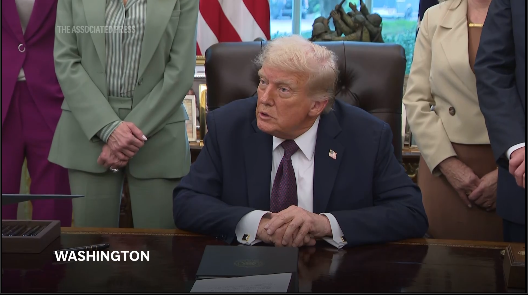
U.S. President Donald Trump confirmed on Monday that a Trump strike on a Venezuelan drug vessel killed three men in international waters. The action marks the second such operation this month and comes amid a major U.S. military buildup in the Caribbean.
Second Strike in Weeks
Trump said the vessel targeted was linked to Venezuelan drug cartels and narcoterrorists. He claimed the boat carried cocaine and fentanyl bound for the United States, though he offered no independent evidence. According to Trump, U.S. Southern Command (SOUTHCOM) forces conducted the strike under his direct orders.
“This morning, on my orders, U.S. military forces conducted a second kinetic strike against extraordinarily violent drug trafficking cartels in the SOUTHCOM area of responsibility,” Trump posted on Truth Social. He argued that such organizations “pose a threat to U.S. national security, foreign policy, and vital interests.”
Video Evidence and Questions
The White House released a 30-second video labeled “Unclassified,” showing what appeared to be a vessel exploding and catching fire at sea. Trump insisted that “big bags of cocaine and fentanyl” were scattered across the ocean after the strike.
Reuters reviewed the video using an AI detection tool but said its blurred quality made full verification difficult. Venezuelan officials did not immediately respond to requests for comment.
Military Buildup in the Region
The strike coincided with a broader show of U.S. force. Five F-35 fighter jets landed in Puerto Rico on Saturday, joining at least seven U.S. warships and a nuclear-powered submarine already deployed.
Defense Secretary Pete Hegseth, speaking to sailors in Puerto Rico earlier this month, said they were “on the front lines of a critical counter-narcotics mission.” On Monday, he reinforced that message on X, vowing: “We will track them, kill them, and dismantle their networks throughout our hemisphere — at the times and places of our choosing.”
Trump hinted that operations might extend beyond sea strikes, saying, “When they come by land, we’re going to be stopping them the same way we stopped the boats.”
Maduro Condemns Aggression
Venezuelan President Nicolás Maduro denounced the action as U.S. aggression and accused Washington of seeking to drive him from power. He said communications between Caracas and Washington had largely broken down.
Maduro has previously insisted that Venezuela deploys tens of thousands of troops to combat drug trafficking and that the people killed in earlier strikes were not cartel members. He has accused the U.S. of manufacturing evidence to justify its actions.
Legal and Political Debate
The strike reignited debate in Washington over presidential war powers. The U.S. Constitution grants Congress authority to declare war, but presidents of both parties have long ordered military strikes without congressional approval.
Democratic Senator Adam Schiff announced plans to introduce a resolution under the War Powers Act. His proposal would require congressional authorization before U.S. forces engage in hostilities against non-state actors. Schiff argued that such decisions should not rest solely with the executive branch.
Background: First Strike
The latest operation follows a September 2 strike that allegedly killed 11 members of Venezuelan gang Tren de Aragua. U.S. officials said that boat was turning back when it was destroyed, raising concerns among legal experts about proportionality and necessity.
At the time, Trump shared video footage of a speedboat exploding, which some Venezuelan officials dismissed as AI-generated. Reuters found no signs of manipulation, though full verification proved inconclusive.
The Pentagon has not released details about the drugs allegedly seized or the weapons used in either strike.
Escalating Pressure on Maduro
The Trump administration has intensified pressure on Venezuela. Last month, it doubled its reward for information leading to Maduro’s arrest to $50 million, citing his alleged ties to drug cartels.
By renaming the Department of Defense to the Department of War — a change requiring congressional approval — Trump has also signaled a more aggressive posture. If approved, Pete Hegseth would become the first U.S. “Secretary of War” in decades.
Global Reactions and Risks
International reactions remain muted, though analysts warn the campaign could destabilize the region. Critics argue that blowing up suspected drug vessels rather than seizing them sets a dangerous precedent. Others suggest the U.S. may be edging closer to direct confrontation with Venezuela.
Maduro’s allies, including Cuba and Nicaragua, have condemned the U.S. buildup in the Caribbean. Meanwhile, opposition figures inside Venezuela view the strikes as part of a broader strategy to weaken Maduro’s grip on power.
Outlook
As Trump prepares for a possible escalation, the strikes raise pressing questions about legality, accountability, and regional stability. The Trump strike on a Venezuelan drug vessel may boost his tough-on-crime image, but it also risks deepening confrontation with Caracas and drawing international scrutiny.
For now, the U.S. military continues its operations in the Caribbean, signaling that more actions may follow. Whether Congress and the global community accept or challenge this aggressive campaign remains to be seen.

Leave a Reply