


Ukraine Drone Strikes and Russian Retaliation
Russia and Ukraine traded accusations on Monday after a series of deadly drone attacks struck civilian areas in both countries. The escalation comes as Ukrainian President Volodymyr Zelenskyy prepares for a week of intense diplomacy at the United Nations General Assembly in New York.
Zelenskyy said he hopes to gather more support for a peace effort, but the fresh violence underscores the deep challenges ahead. The Ukraine drone strikes and Russian counterattacks have fueled fears of the war spilling beyond Ukraine’s borders.

Zelenskyy Seeks UN Support
In a message to Ukrainians, Zelenskyy said his schedule in New York includes nearly two dozen meetings with world leaders. He emphasized the urgency of securing stronger global backing.
“It is vital that this week strengthen the world’s resolve for robust action,” Zelenskyy said. “Without strength, peace will not prevail.”
He confirmed plans to meet U.S. President Donald Trump, though Trump’s push for a peace deal has not delivered results since he took office in January.
Zelenskyy also highlighted the scale of Russia’s assaults. He said that in just one week, Moscow launched more than 1,500 drones, 1,280 glide bombs, and 50 missiles. Many of the weapons reportedly contained foreign-made components.
Ukraine is pressing for tighter international sanctions on Russia in response.
Russian Strikes on Zaporizhzhia
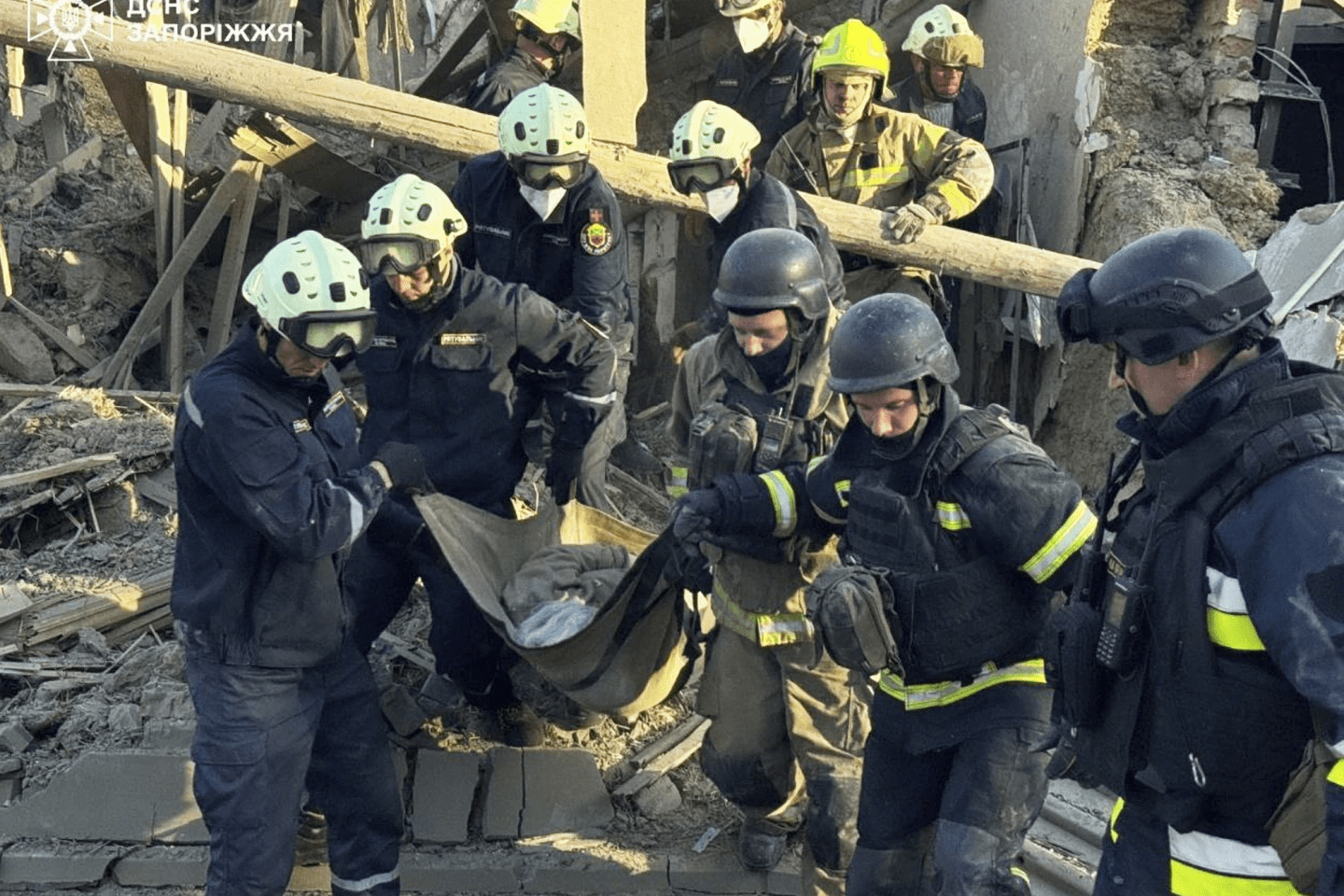
One of the deadliest overnight incidents occurred in the southern city of Zaporizhzhia. Seven Russian aircraft bombarded the area early Monday morning.
According to regional head Ivan Fedorov, three people died and two others were injured. The strikes damaged shopping centers, parking lots, homes, and critical infrastructure.
“None of the sites had anything to do with military infrastructure,” Fedorov said.
Ukraine’s air force reported intercepting 132 of 141 drones launched overnight. However, some still reached civilian areas, showing the limits of Ukraine’s air defenses.

Ukraine Drone Strikes on Crimea and Belgorod
Russia also accused Ukraine of launching deadly drone attacks. In Crimea, the Moscow-appointed governor Sergei Aksyonov said Ukrainian drones struck the seaside resort town of Foros. Three people died and 16 others were injured in the blasts.
Aksyonov insisted there were no military targets in the area. Foros is a popular vacation destination on the Black Sea, making the attack especially alarming for residents.
In Russia’s Belgorod region, Governor Vyacheslav Gladkov reported three more deaths and 10 injuries from Ukrainian drone attacks on Sunday. Russia’s Defense Ministry claimed its forces downed 114 Ukrainian drones across several regions early Monday.
These Ukraine drone strikes mark one of the largest cross-border aerial assaults in recent weeks.

NATO and European Concerns
The intensifying strikes have raised concerns in Europe. NATO member states condemned Russian provocations after drones landed in Poland and Russian aircraft briefly entered Estonian airspace.
Latvian President Edgars Rinkevics warned that Russia is testing NATO’s response. He said Moscow wants to drain Western support for Ukraine by forcing member countries to focus on their own defenses.
Still, he admitted Russia has not yet crossed a clear “red line,” though tensions could easily spiral.
Moscow dismissed NATO’s concerns. Kremlin spokesman Dmitry Peskov called the claims “void, ungrounded and provocative.”
Risks of Wider Escalation
Analysts warn that the cycle of Ukraine drone strikes and Russian retaliation risks widening the war. Strikes near NATO borders raise the danger of accidental escalation with the alliance.
Military experts say both sides are increasingly relying on drones. These weapons are cheaper than missiles, easier to produce, and harder to track. But their widespread use against civilian areas violates international law and raises humanitarian concerns.
So far, neither side shows signs of backing down. Russia continues its massive aerial bombardments, while Ukraine leverages drones to strike deep inside Russian territory.
Looking Ahead at the UN
As Zelenskyy heads into a packed week of diplomacy, his challenge is twofold. He must convince skeptical nations to increase pressure on Moscow while also proving Ukraine can withstand Russia’s latest offensive.
The Security Council is expected to debate the war this week. But with Russia holding veto power, any binding resolution remains unlikely.
Still, Zelenskyy hopes to rally broader support from Europe, Asia, Africa, and Latin America. His team frames the war not just as Ukraine’s struggle but as a global test of whether aggression can go unpunished.
For now, the Ukraine drone strikes and Russian counterattacks serve as grim reminders of the stakes. Civilians on both sides continue to pay the highest price while the path to peace remains uncertain.


Leave a Reply